Ovechkin's last lap is already running on 13 minutes a night
He told the Capitals this season is his last, and two games of usage say Washington's plan for him was already changing.
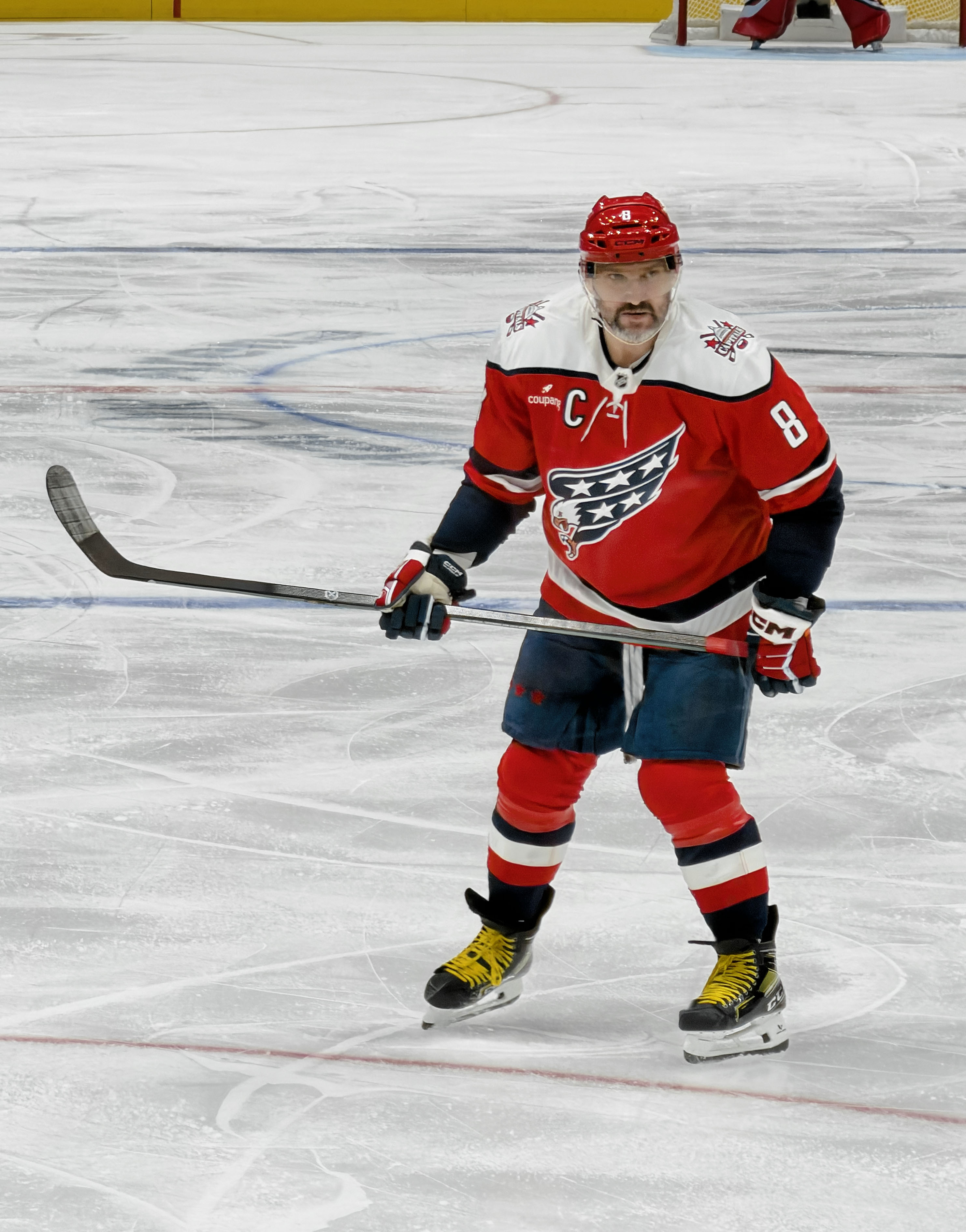
Alex Ovechkin picked the right year to say goodbye, and the Capitals had already started planning for it before he said a word. Through two games he has averaged 13.2 minutes a night, by our count, down from 17.4 last season and 19.2 two seasons before that.
The number: 12.8. That's how many minutes he played on Oct. 2, the lowest regular-season total in our archive, which runs back to 2023-24 and covers 228 of his games. It's a two-game sample, so treat it as a signal rather than a verdict.
What he said
Ovechkin told his teammates Monday, before practice in Arlington, that 2026-27 will be his last NHL season. The timing was deliberate: Monday was the 21st anniversary of his NHL debut. He turned 41 on Sept. 17, and this is his 22nd season.
"This is going to be my last year, I'm pretty sure," he said. "It's sad, but it is what it is."
He framed the decision around his family and his physical condition. "I'm not 20 years old and I want to play with my kids when they're growing up," he said.
What's left on the board
He enters the season with 929 goals, the NHL record, after passing Wayne Gretzky's 894 on April 6, 2025. He also holds the records for power-play goals (331) and game-winners (141). He scored 32 in 82 games last season, which is a productive season for anyone and a remarkable one at 40.
The contract tells you the Caps saw this coming. He signed a one-year deal on July 2: $1 million in salary, a $3.25 million signing bonus and $4.75 million more once he plays 10 games. That's a farewell structure, with almost all of the money tied to availability rather than production.
The usage question
Here's the part that matters for the standings. Through two games he has one assist, one shot and 2.3 minutes a night on the power play, by our count. Last season he averaged 4.5 minutes of power-play time and nearly three shots a game.
Washington spent the summer adding Alex Tuch, Jordan Kyrou and Boone Jenner up front. That depth explains why the minutes moved, but it's also a choice the Caps have to make on purpose, because 331 of his goals came on the power play. A 41-year-old shooter doesn't need 19 minutes; he needs the left circle with the man advantage.
The objective inside the dressing room is unambiguous. "I don't think any better sendoff than that would be for us to help Ovi try to achieve that again," Dylan Strome said of another Cup run. Tom Wilson is the only other player left from the 2018 team.
Washington missed the playoffs last season by three points behind Philadelphia for third in the Metropolitan. That margin is thin enough that power-play deployment could realistically decide it.
What I'd watch
The home opener is Wednesday against Pittsburgh. Watch the first power play closely. If he's on the top unit at his spot, the Caps are building the last season around what he still does better than anyone. If he's on the second unit again, the 13-minute nights are the plan, not an accident.
My read: give him the first unit and live with the even-strength minutes. Twenty goals in a farewell year is realistic. Getting there through the second power-play unit is not.