The NHL is stopping .892, which is why Hellebuyck cost so much
League save percentage is down again, only 12 goalies with five starts are at .910, and that scarcity set the price New Jersey paid.
The number: .892. That's the NHL's save percentage through 167 regular-season games, per NHL data: 8,073 saves on 9,052 shots. It's the clearest explanation for why the Devils just paid a pile of futures for a goalie who hasn't played since April.
Last season finished at .896, the first year under .900 since 1996, and this season is lower again. Nine thousand shots is not a fluke-sized sample, so I'd stop waiting for it to bounce back.
When the average falls, the gap between an ordinary goalie and a good one gets wider and more expensive. That gap is now the most valuable thing a team can buy.
Where the goals come from
The power play is doing a lot of the damage. By our count, 230 of the league's 1,047 goals this season have come with the man advantage, or 22 percent. Teams are getting 6.5 power plays a game between them.
Goalies are stopping .902 at even strength and .841 while their team is shorthanded, per NHL data. Every extra penalty is a trip into the part of the game where nobody can save you.
Pabs has the Panthers' version of that problem, and Florida is not alone.
The other half is shot quality. Goalies are facing 27.1 shots a game, down from 31.5 in 2021-22.
The low-percentage looks are disappearing, and the ones that remain are harder to stop. Save percentage on shots from 20 to 40 feet has slipped to .886 from .903, and inside 20 feet it's down to .818 from .833. Fewer shots, better ones.
The scarcity
By our count, 39 goalies have made at least five starts. Only 12 of them are at .910 or better.
Linus Ullmark leads at .945 and Jake Oettinger is next at .939, through eight starts each. That's a small sample, and I wouldn't price either number as permanent. But the top of the list is short, and the bottom is crowded: 14 of those 39 are under .885.
The Devils' math
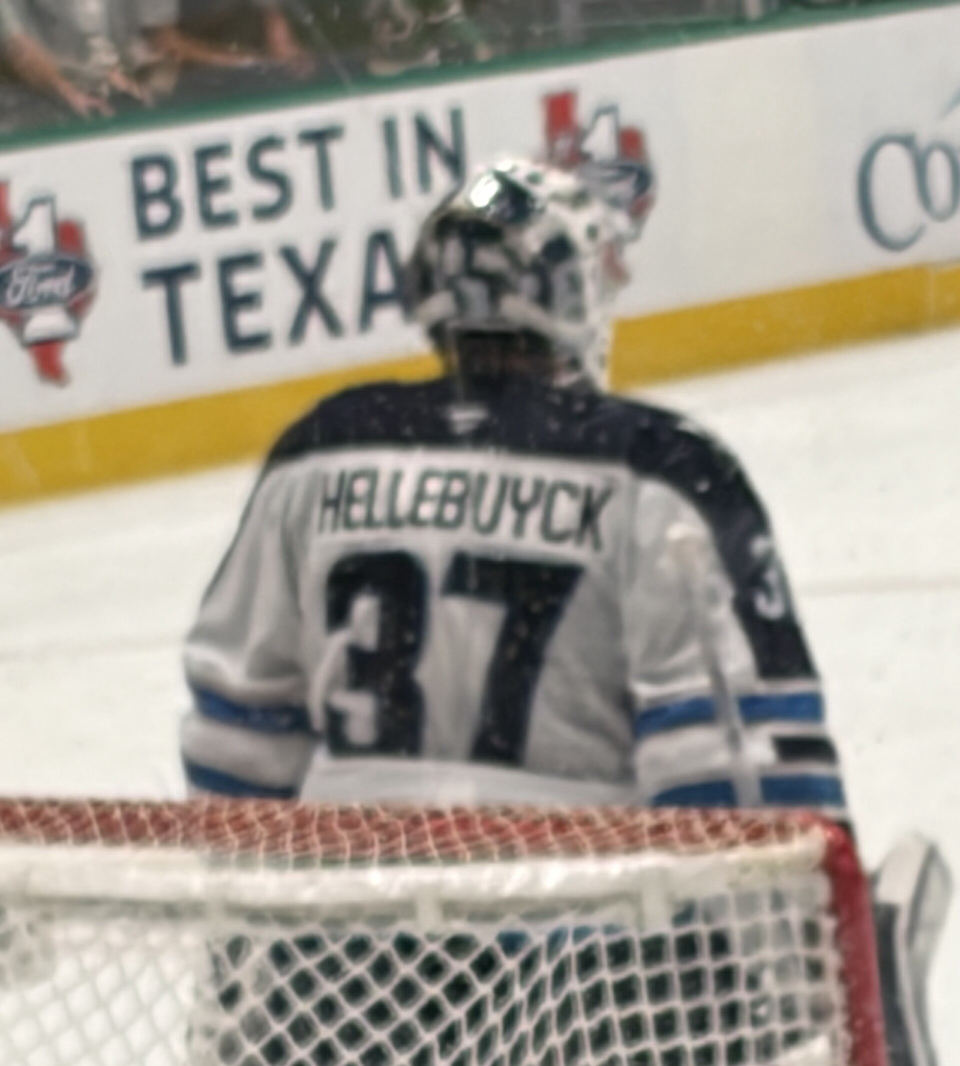
Jake Allen is at .883 through six starts for New Jersey, per NHL data. Connor Hellebuyck arrives with three Vezinas, a Hart and five years left at $8.5 million a season.
Here's the simple version: at this year's rate of 27.1 shots a game, a goalie sees about 2,200 shots over 82 games. Every point of save percentage is worth about 2.2 goals. Moving from Allen's .883 to the .910 group is 27 points, or roughly 60 goals over a full season of shots.
Nobody gets a full season of shots, and Hellebuyck hasn't faced live NHL pucks since April 13. Discount it for workload and rust; even at half, that's 30 goals, and no skater the Devils could have bought moves the needle that far.
That's why the term didn't scare them. In a .910 league, a great goalie is a luxury. In a .892 league, he's the roster.
What I'd watch: the penalty count. If officials keep calling 6.5 power plays a game, the league number stays under .900 and every team with a weak backup gets more desperate. The next goalie trade costs more than this one did.